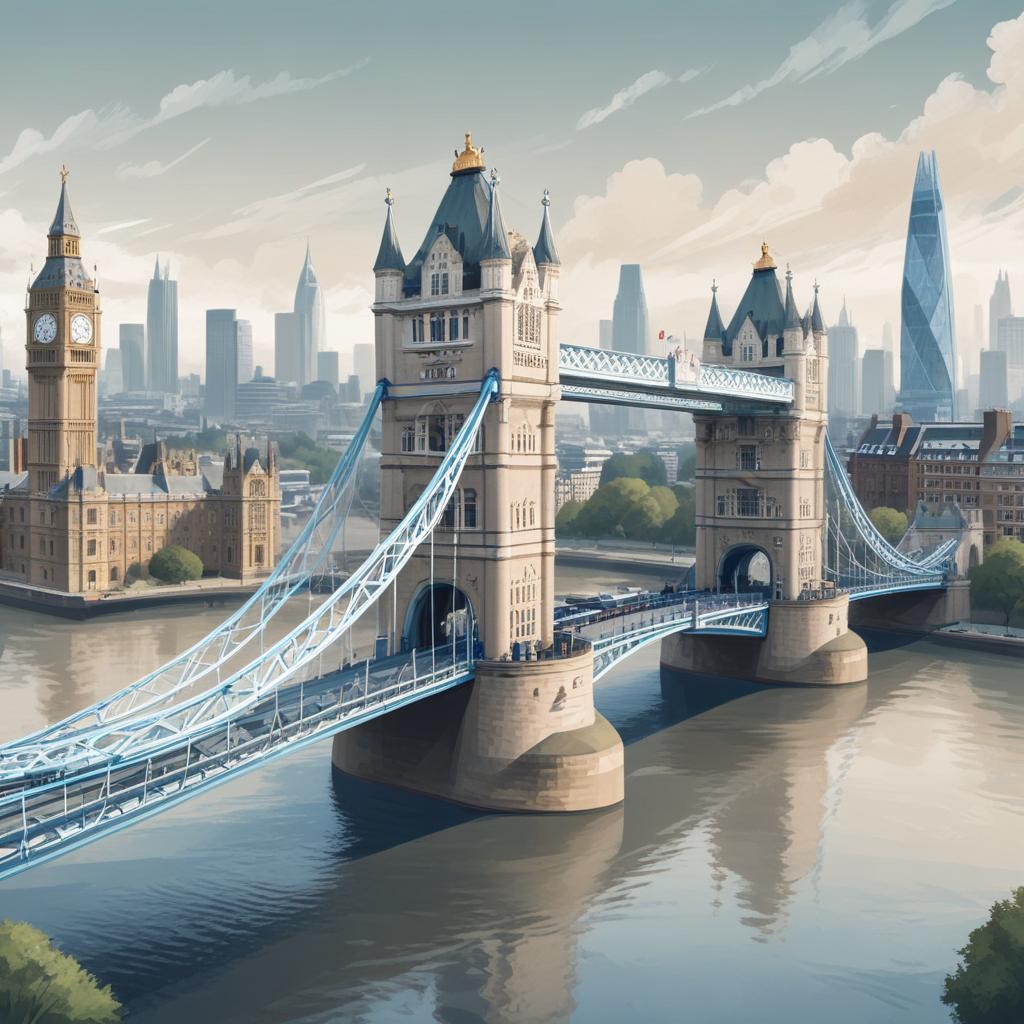
Introduction to Iconic Bridges of London
London bridges stand as remarkable symbols of the city’s rich history and architectural innovation. These iconic bridges London hosts are not just functional structures for crossing the River Thames; they embody centuries of engineering evolution and cultural heritage. From medieval stone arches to modern steel marvels, each bridge offers a unique glimpse into the era it was built and the visionary minds behind it.
The historical significance of London bridges is profound. Many have witnessed pivotal moments in English history, serving as vital links in commerce, transportation, and defense. The diversity in their designs reflects the changing architectural styles and technological advancements across different periods. For example, some bridges feature Gothic or Victorian details, while others highlight sleek contemporary aesthetics.
Architecturally, these bridges are masterpieces in their own right. They showcase a range of construction techniques—from the traditional use of stone and brick to the integration of iron and steel. This blend of old and new exemplifies London’s ability to preserve its heritage while embracing innovation. As a result, London bridges have become popular landmarks and tourist attractions, admired not only for their functionality but also for their artistic and engineering significance.
Overall, a bridge overview of London reveals much more than simple crossings over water. London bridges symbolize the city’s enduring spirit, creativity, and resilience. Whether it’s the grandeur of Tower Bridge or the elegant simplicity of Millennium Bridge, each one tells a story. Exploring these iconic bridges London offers is a journey through time and architecture, celebrating the marvels that connect communities while enhancing the cityscape.
Tower Bridge: History and Architecture
Tower Bridge is one of London’s most iconic landmarks, renowned for its unique combination of engineering and architectural beauty. Constructed between 1886 and 1894, the bridge was designed to ease road traffic while maintaining river access to the busy Pool of London docks. The origins of Tower Bridge lie in the urgent need for a new crossing downstream of London Bridge due to the city’s rapid expansion and industrial growth during the Victorian era.
The design of Tower Bridge is a striking example of Victorian Gothic style, chosen to harmonise with the nearby Tower of London and give the bridge a majestic and historical feel. Its twin towers, constructed from steel with a stone facade, frame two bascules – massive moveable roadways – which can be raised to allow tall ships to pass. This bascule mechanism, an engineering marvel of its time, uses a system of counterweights and hydraulics originally powered by steam and now driven by electricity. This innovative design allowed the bridge to operate efficiently without disrupting the river traffic below, a critical factor for London’s commerce.
In addition to its aesthetic grandeur, Tower Bridge holds immense historical importance as a symbol of London’s industrial prowess during the late 19th century. It has witnessed significant events and changes in the city’s landscape while remaining a functional and vital crossing over the River Thames. The bridge’s ability to rise and lower up to 1,000 times a year highlights its ongoing operational significance. Tower Bridge not only represents advanced Victorian engineering but also functions as a cultural emblem, drawing millions of tourists annually who are fascinated by its blend of historic architecture and mechanical ingenuity.
Today, Tower Bridge stands as a proud testament to London’s bridge architecture and historicity. It continues to captivate visitors and serves as a prominent reminder of the city’s rich heritage, blending engineering excellence with architectural beauty in one of the world’s most recognizable structures.
Design and Construction Details
Tower Bridge is an iconic example of Victorian engineering, combining both functionality and aesthetic appeal. Its design features two massive towers constructed on piers sunk into the riverbed, linked at the upper level by two horizontal walkways designed to withstand the forces exerted by the suspended sections of the bridge. The architectural style is a combination of Gothic Revival elements, which complement the nearby Tower of London, lending the bridge a distinctive and historic appearance.
The materials used in the Tower Bridge design include steel for the framework, which was revolutionary at the time of construction. The steel skeleton is clad in Cornish granite and Portland stone to protect the underlying structure and to enhance its visual grandeur. The choice of these durable materials ensured longevity and resistance to the elements, vital for a bridge spanning the River Thames.
From an engineering standpoint, Tower Bridge was an impressive feat. The construction facts reveal that it incorporates a bascule mechanism, operated originally by hydraulics powered by steam engines, allowing the bridge to lift and let river traffic pass underneath. This engineering technique involves two leaves or bascules that can be raised independently, controlled by a system of counterweights that balance the span during the lift. The use of such advanced engineering ensured that the bridge could serve both pedestrians and vehicular traffic efficiently without interrupting river navigation.
In summary, Tower Bridge’s design and construction showcase a blend of ornate architectural details and cutting-edge engineering for its era. The careful selection of materials and innovative construction techniques have made it a lasting symbol of London’s industrial heritage and architectural ambition.
Cultural Significance and Popularity
Tower Bridge is not just a marvel of engineering but a powerful cultural icon that has shaped the identity of London in both popular culture and tourism. Its distinctive twin towers and bascule design make it instantly recognizable, appearing in countless films, television shows, and media representations as a symbol of the city’s rich history and architectural grandeur. This cultural impact elevates Tower Bridge beyond a functional crossing to a beloved emblem of London itself.
As one of the most visited tourist attractions in London, Tower Bridge draws millions of visitors every year, eager to learn about its history and experience the panoramic views from its high-level walkways. Its popularity is fueled not only by its aesthetic appeal but also by the interactive exhibitions and glass floors that allow tourists to engage deeply with the bridge’s fascinating engineering and operational mechanics. This immersive experience enhances Tower Bridge’s standing as a must-see destination for travelers.
The bridge holds significant symbolic meaning for both Londoners and visitors. For locals, it represents resilience and the city’s connection to its past, serving as a reminder of London’s ability to blend tradition with innovation. For tourists, Tower Bridge is often seen as a gateway to the city’s historic core, embodying the spirit and grandeur of London. Its enduring popularity ensures that it remains an integral part of London’s cultural landscape, celebrated worldwide as an iconic landmark.
London Bridge and Other Notable Bridges
London Bridge holds a unique place in the history and landscape of the city. Known historically for its medieval origins, the current London Bridge, opened in 1973, replaced a 19th-century stone-arched bridge. It connects the City of London with Southwark and is vital both for its functional role in traffic and its iconic status. Unlike some of the more decorative bridges, London Bridge’s design is straightforward, focusing on utility and resilience, a contrast that invites comparisons with other notable London bridges.
The city’s bridges each have distinctive features and histories that add to London’s architectural diversity. The Millennium Bridge, for example, is a pedestrian-only steel suspension bridge known for its sleek, modern design and the famed “wobbly” issue shortly after its opening in 2000. Its innovative engineering and location provide stunning views of landmarks like St. Paul’s Cathedral and Tate Modern, making it a popular crossing for walkers enjoying river vistas.
Westminster Bridge, by contrast, offers a beautiful blend of history and aesthetics. Painted predominantly in a striking green that matches the leather seats in the House of Commons, Westminster Bridge is a symbol of British parliamentary tradition and provides picturesque views of the Houses of Parliament and the London Eye. Dating back to the mid-19th century, it features Gothic details that contrast with the modernity of the Millennium Bridge and the practical simplicity of London Bridge.
| Bridge Name | Opening Year | Key Features | Function & Style |
|---|---|---|---|
| London Bridge | 1973 (current) | Simple concrete design, historically significant | Vehicular and pedestrian traffic, pragmatic construction |
| Millennium Bridge | 2000 | Sleek steel suspension, pedestrian-only | Modern engineering, scenic river views |
| Westminster Bridge | 1862 | Gothic style, painted green | Historical landmark, scenic sightseeing spot |
London Bridge: Evolution and Importance
The London Bridge has a rich history marked by continuous evolution and significant importance for city connectivity. Over the centuries, this iconic structure has been rebuilt multiple times, adapting to the needs and technological advancements of each era. Originally, a Roman wooden bridge stood at the site, facilitating the expansion of London as a key settlement. By the medieval period, a stone bridge with multiple arches replaced the wooden structure, becoming one of the most recognizable landmarks of its time.
Throughout its history, London Bridge has underwent various modifications reflecting changes in engineering and urban planning. For instance, in the 19th century, the old medieval bridge was replaced with a more modern stone-arched bridge designed to accommodate increasing traffic. Later, in the 20th century, this bridge itself was dismantled and relocated to the United States, making way for the current more functional and wider concrete bridge that better serves London’s booming population and transport demands.
London Bridge’s evolution is not only about its physical changes but also its crucial role in connecting different parts of the city. As a vital crossing over the River Thames, it has enabled seamless movement between the financial heart of the City of London and the bustling areas to the south. This connectivity has fostered commerce, culture, and urban integration, making London Bridge a symbol not just of architectural transformation but also of the city’s enduring connectivity and growth.
Millennium Bridge: Modern Engineering Marvel
The Millennium Bridge stands as a testament to modern engineering excellence in London. This sleek and innovative pedestrian bridge was designed to connect the bustling City of London with the cultural hub of the South Bank, providing a direct route for walkers between St. Paul’s Cathedral and Tate Modern. Unlike traditional bridges that accommodate vehicles, the Millennium Bridge is a pedestrian-only crossing, emphasizing its purpose as a safe, serene walkway over the River Thames.
One of the unique features of the Millennium Bridge is its minimalist, contemporary design. The structure employs a suspension system using slender steel cables, creating an airy, “blade of light” appearance that blends harmoniously with the urban landscape. This modern bridge in London reflects cutting-edge architectural and engineering techniques designed to reduce visual intrusion while maintaining maximum strength and stability.
Originally opened in 2000, the Millennium Bridge faced initial challenges with noticeable swaying caused by pedestrian traffic. This led to innovative engineering solutions, including the addition of dampers that successfully eliminated the lateral movement. Now, the bridge offers a smooth and enjoyable crossing experience for thousands of pedestrians daily, making it not only a functional link but also a celebrated modern icon in London’s skyline.
Westminster Bridge: Historical and Political Symbolism
Westminster Bridge is a historical bridge that holds significant importance both architecturally and symbolically in the heart of London. Completed in 1862, the bridge stands as a testament to Victorian engineering and design, featuring its iconic green color which complements the nearby Houses of Parliament. Its construction replaced an earlier bridge from the mid-18th century, highlighting the continuous evolution of London’s infrastructure over the centuries.
Strategically located, Westminster Bridge spans the River Thames and links the City of Westminster on the west side with Lambeth on the east. Its proximity to the Palace of Westminster — home to the UK Parliament — imbues the bridge with rich political symbolism. Often seen in the backdrop of political broadcasts and public demonstrations, Westminster Bridge acts as a physical and metaphorical gateway to British governance and democratic tradition.
The bridge provides stunning views of prominent landmarks, including the towering Elizabeth Tower and the majestic Houses of Parliament, reinforcing its status as more than just a means of crossing the river. Westminster Bridge continues to be a historic bridge celebrated for its key location at the political heart of the United Kingdom, attracting countless tourists and locals alike who appreciate its cultural and historical significance.

I love exploring London’s hidden corners and sharing what I discover with fellow travellers. When I’m not wandering the streets of the capital, I enjoy writing detailed guides that help others make the most of their visit.